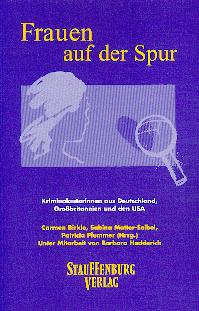
Since its emergence in the mid-nineteenth century, the crime genre has undergone a number of crucial developments, first and foremost in terms of gender and diversity. Early 'mastermind detectives' (such as Poe's C. Auguste Dupin and Conan Doyle's Sherlock Holmes) soon found themselves in the company of 'lady detectives' seeking to establish themselves in a patriarchal world. In the late 20th century African American women writers, such as Valerie Wilson Wesley and Barbara Neely, challenged racist stereotypes by creating investigators who were women of colour. Today, the genre is hugely successful as well as highly diversified, and owes much of its success to serialization. British provincial settings created by twentieth-century 'Queens of Crime' have been replaced by Patricia Cornwell's and Kathy Reichs' high-end forensic investigations and urban environments.
In this seminar, students will be provided with an introduction to popular culture and popular literature via the crime genre. They will study the rise of feminist crime fiction and diversification of the genre since the late 20th century and familiarize with critical accounts (e.g. by Evelyne Keitel), before turning to case studies, mainly from contemporary British, Irish and Canadian crime fiction, including filmic adaptations.
- verantwortliche Lehrperson: Patricia Plummer