- verantwortliche Lehrperson: Monika Meise
- verantwortliche Lehrperson: Frank Osterbrink
- verantwortliche Lehrperson: Julia Reitzig
- verantwortliche Lehrperson: Natascha Scheibke
Kursbereich: Mathematik
ePortfolio: Nein
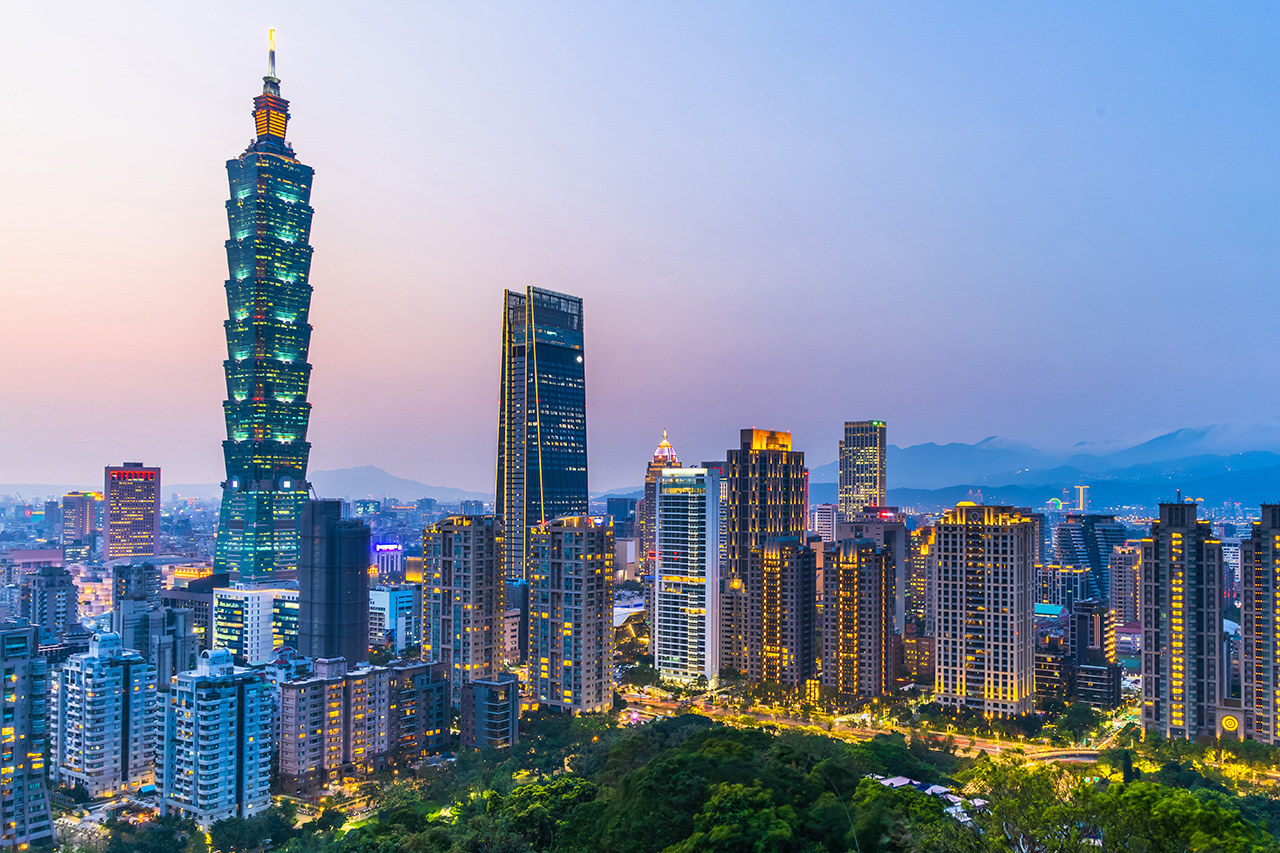
This course provides an in-depth examination of the complexities of Taiwan's history, culture, society, and politics. Through a multifaceted approach, key issues that shape its identity and relationships with the world will be examined. The curriculum will focus on pivotal topics, including the history of Taiwan, from its indigenous roots to its colonial past and modern-day developments. Taiwan's history is characterised by a complex interplay of indigenous, colonial, and modern influences. Prior to its annexation by the Qing dynasty, the island had a distinct history involving the indigenous peoples who first inhabited it, as well as colonisation by the Netherlands and Spain, and the short-lived Kingdom of Tungning. Following the Second World War, Taiwan was a Japanese colony for 50 years, and after the Chinese Civil War, the Kuomintang and its leader, Chiang Kai-shek, fled to Taiwan, establishing a new authoritarian regime. However, Taiwan's story took a remarkable turn in the 1960s, as it, along with other Asian Tigers, experienced rapid industrialisation and economic growth. By the mid-1980s, Taiwan had transformed into one of Asia's most well-functioning democracies. This transformation has been marked by significant advancements in human rights, civil liberties, and the rule of law, earning Taiwan a unique position in the global landscape.
As a fairly small island nation with a large population of over 23.5 million, Taiwan plays a significant role in regional and global politics. This course will provide a nuanced understanding of Taiwan's complex history, its ongoing struggles, and its remarkable achievements, offering a unique perspective on this fascinating island nation. Throughout the course, we will examine various aspects of Taiwanese society and culture, including the experiences and perspectives of Taiwan's indigenous peoples, the languages, cultures, and traditions that define them, as well as the role of religion, gender, literature, and other factors in shaping the nation's identity. By exploring these complexities, a deeper understanding of Taiwan's place in the world and its significance in the context of global politics and culture will be acquired.
This seminar will provide students with an introduction to contemporary Irish women's literature from the 1970s until the present day. During this time, Ireland has witnessed hitherto unimaginable social change. As the editors of the anthology Stories by Contemporary Irish Women wrote in 1990: "Irish women have participated in a cataclysmic political, economic, and social upheaval – a violent civil war in the North, an unsettling European economic alliance, and a traumatic clash of traditionalism and modernism. […] Gone is the nineteenth-century image of a mist-shrouded isle with peasants dancing on the Big House lawns and thatched cabins with hens roosting on open half-doors. The modern writer mire likely inhabits a world of computerized offices, chic boutiques, fashionable lounges and fast cars – it is the world of her fiction. She portrays a society in flux, a society whose very traditions and values are in question." Instead, Irish women writers and poets from Edna O'Brien to Medbh McGuckian have embraced feminist ideas and challenged traditional social and religious norms and values.

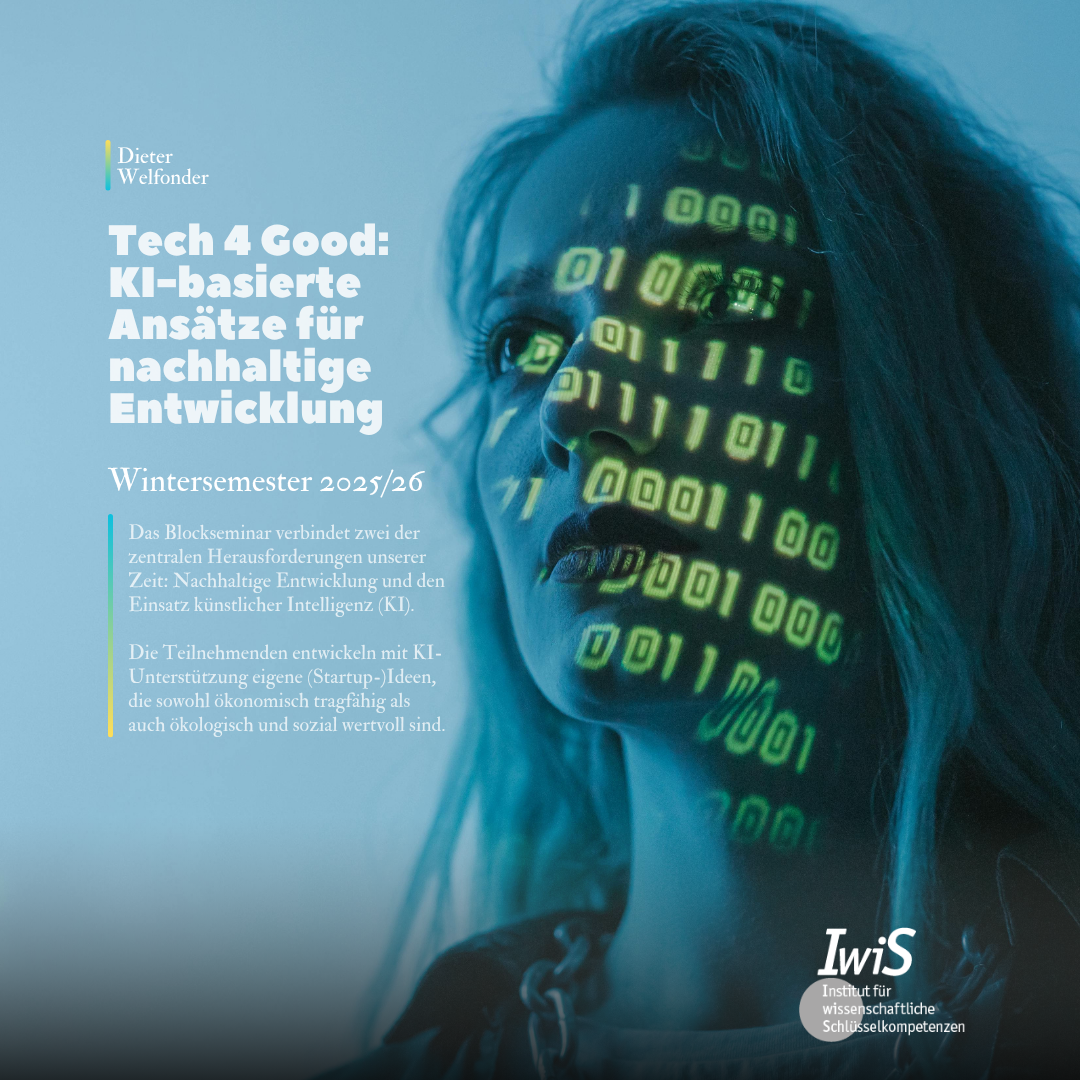
Das Seminar verbindet Künstliche Intelligenz (KI) mit den 17 Nachhaltigkeitszielen der UN (SDGs). Die Studierenden lernen, wie KI-Anwendungen genutzt werden können, um ökologische, soziale und wirtschaftliche Nachhaltigkeit zu fördern und globale Herausforderungen wie Klimawandel oder soziale Ungleichheit zu bewältigen.
Mithilfe von Methoden wie der Business Model Canvas entwickeln die Teilnehmenden in Teams eigene, nachhaltige (Startup-)Ideen. Sie nutzen dabei fortschrittliche KI-Tools, um innovative Lösungsansätze zu entwerfen und deren Skalierung zu planen.
Ein zentraler Bestandteil ist die kritische Reflexion der KI-Nutzung im Sinne des DIGICOMP-Frameworks. Behandelt werden der Energieverbrauch von KI, Fragen zu Lizenzen und Urheberrecht, Datenschutz und Cyber-Resilienz sowie die Bedeutung von digitaler Partizipation und verantwortungsvoller Digital Citizenship.
Das Blockseminar kombiniert interaktive Workshops und Projektarbeit mit Impulsen von Gastreferenten.
Lernziele:
Nach Abschluss des Seminars können die Studierenden:
Dies ist der Moodlekurs für das Modul "Technische Mechanik 1" im Wintersemester 2025/2026
Moodle an der UDE ist ein Service des ZIM