Lehr-Moodle der Universität Duisburg-Essen
Suchergebnisse: 3694
In summer semester 2026, Computer Based Engineering Mathematics will take place in presence with accompanying online material. The key which you will need for enrollment will be announced during the first lecture.
- verantwortliche Lehrperson: Claudia Weis
Kursbereich: Ingenieurwissenschaften
ePortfolio: Nein
Modul zur Veranstaltung Computer Languages for Engineers
Lernziel
Die Studierenden
- kennen grundlegende Strukturen von Programmiersprachen und deren Implementierung in FORTRAN und C/C++.
- kennen die Grundlagen von CodeBlocks und können Programmcode in CodeBlocks generieren.
- können Algorithmen in diversen Sprachen (z.B. FORTRAN, C++) implementieren.
Entwicklungswerkzeuge
Als Entwicklungswerkzeuge werden eingesetzt
- FORTRAN77- und Fortran90-Compiler
- C/C++-Compiler
- entsprechende IDEs
- verantwortliche Lehrperson: Georgia Kikis
- verantwortliche Lehrperson: Sharath Nattoji Shara
Kursbereich: Statik und Dynamik der Tragwerke
ePortfolio: Nein
Modul zur Veranstaltung Computer Languages for Engineers
Lernziel
Die Studierenden
- kennen grundlegende Strukturen von Programmiersprachen und deren Implementierung in FORTRAN und C/C++.
- kennen die Grundlagen von CodeBlocks und können Programmcode in CodeBlocks generieren.
- können Algorithmen in diversen Sprachen (z.B. FORTRAN, C++) implementieren.
Entwicklungswerkzeuge
Als Entwicklungswerkzeuge werden eingesetzt
- FORTRAN77- und Fortran90-Compiler
- C/C++-Compiler
- entsprechende IDEs
- verantwortliche Lehrperson: Alaa Elsayed Moussa Ewis
- verantwortliche Lehrperson: Georgia Kikis
- verantwortliche Lehrperson: Faezeh Torkaman
Kursbereich: Statik und Dynamik der Tragwerke
ePortfolio: Nein
In this course room you find information, materials and time schedule for "Computer Network Lab" which provides basic knowledge about conception, implementation and operation of computer networks.
Basic ideas and terms related to the network like network topologies, protocols, routing, sockets, etc. will be introduced and explained.
In order to be registered for the CNL moodle course:
- Open the LSF portal in your browser.
- Select “Dates/Times/Location”
- Select “apply now / cancel application
- Log in with your university user ID and password and follow the instructions on the screen
Please first register for the course via LSF by 21.04.2026. The registration key for the Moodle course will be sent via LSF on 22.04.2026.
After the 22.04.2026, please send an e-mail from your university account to joachim.zumbraegel@uni-due.de asking for enrolment in the Moodle course for CNL.
- verantwortliche Lehrperson: Joachim Zumbrägel
Kursbereich: Lehrstuhl für Systeme der Medizintechnik (SMT)
ePortfolio: Nein
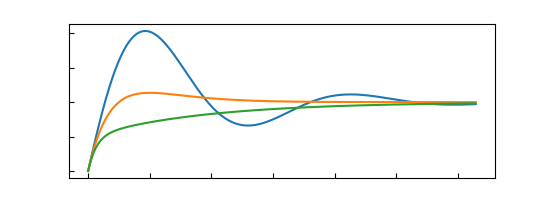
Das Computerpraktikum begleitet die Vorlesung "Klassische Mechanik für Energy Science" in Form von selbstgeschriebenen Python-Programmen zur Verdeutlichung der Vorlesungsinhalte.
Erster Termin: 16.04.
- verantwortliche Lehrperson: Lothar Brendel
Kursbereich: Energy Science
ePortfolio: Nein
This hands-on workshop introduces participants to containerization in High-Performance Computing (HPC), focusing on Apptainer (formerly Singularity) as the primary runtime for reproducible scientific workloads on clusters such as amplitUDE.
Participants will explore the container ecosystem, understand how Docker, Docker Hub, and NVIDIA GPU containers integrate into HPC workflows, and gain practical experience building and running containers on CPU and GPU nodes.
By the end of this workshop, participants will be able to:
-
Explain how containerization enhances reproducibility, portability, and sustainability in scientific research.
-
Compare Docker, Apptainer, and virtual machines in terms of performance, privileges, and HPC compatibility.
-
Use Docker Hub and other container registries as sources for reproducible environments.
-
Build and run custom containers with Apptainer, including NVIDIA GPU support.
-
Execute containerized applications within Slurm job scripts on amplitUDE.
Prerequisites:
- Basic knowledge of the Unix Shell, e.g., from the carpentry course.
- Access to amplitUDE or any HPC system with Apptainer/Singularity available.
- Bring your own laptop (preferably Linux).
- verantwortliche Lehrperson: Junaid Mir
Kursbereich: Informatik
ePortfolio: Nein
This course examines the structural, historical, and institutional dimensions of social inequality in South Korea from a sociological perspective. The course begins with a central paradox: although South Korea is a highly advanced economy with a strong public commitment to fairness, inequality remains deeply embedded and is often publicly rationalized.
Through theoretical inquiry and empirical analysis, students develop a comprehensive understanding of the mechanisms that produce and reproduce inequality, the lived experiences of those affected, and the policy challenges associated with addressing inequality in contemporary Korea.
- verantwortliche Lehrperson: Yeonjin Kim
Kursbereich: MA
ePortfolio: Nein

To analyse conversation, ultimately, means to analyse how people interact. In this seminar we will explore how speakers manage the apparently simple task of social interaction in everyday life. We will examine the micro-structures of human conversation, as discovered by the founders of the discipline - Harvey Sacks, Emanuel Schegloff and Gail Jefferson – in the late 1960s. We will learn about the empirical methodology used to analyse real language data from multifarious scenarios, ranging from casual phone calls to institutional talk. Students will acquire the technical skills needed to compile and analyse their own data and conduct their own analyses of the linguistic mechanisms used to establish, organise and maintain social relationships.
- verantwortliche Lehrperson: Nuria Hernandez y Siebold
Kursbereich: Anglophone Studien
ePortfolio: Nein
The lecture teaches students how to design and evaluate systems that help humans to cooperate and collaborate with each other. It provides an overview of the research area Computer Supported Coperative Work (CSCW). After completing the module, the students have learned principles of designing CSCW systems and know the most important technical methods for supporting social interaction.
- verantwortliche Lehrperson: Michael Prilla
ePortfolio: Nein
Lucia Moholy lange Zeit nur als Frau von Lászlo Moholy-Nagy gesehen und mittlerweile als eigenständige Fotografin, Autorin und Dokumentaristin bekannt. Ihre Fotografien sind durch Ihr bewegtes Leben, geprägt von Migrationen, engen künstlerischen Kontakten am Bauhaus, dem Neuen Sehen, Verbindungen zur Lebensreformbewegung und dem kommunistischen Widerstand Nazideutschlands. Die Motive reichen von Portraits, Architektur- und Produktfotografien bis hin zu einer Art dokumentarischer Reisefotografien. Zudem wird hier der Aspekt der Autorschaft anhand ihrer verschwundenen Glasnegative, nach Ihrer Flucht ins Exil und der spätere Kampf um Ihre Rechte an Ihren Fotografien thematisiert.
Im Seminar werden die verschiedenen Etappen Ihres Lebens anhand von Fotografien nachvollzogen. Eine gute Auswahl an Forschungsliteratur, z.B. von Rolf Sachsse, Jordan Troeller, u.a. werden in die Betrachtungen einbezogen. In Gruppen und im Plenum werden die Besonderheiten und unterschiedlichsten Aspekte der Fotografien erarbeitet und ihre Rezeptionen in der Literatur herausgearbeitet.
Die Bedeutung von Lucia Moholy bis heute findet u.a. durch den Künstler Jan Tichy Ausdruck, dessen Arbeit zu Moholy ebenfalls Thema des Seminars sein wird.
- verantwortliche Lehrperson: Simone Krämer
Kursbereich: Kunst und Kunstwissenschaft
ePortfolio: Nein
Moodleraum zur gleichnamigen Übung in der Kunstpraxis
- verantwortliche Lehrperson: Johannes Buchholz
Kursbereich: Kunst und Kunstwissenschaft
ePortfolio: Nein
Das Laborpraktikum findet in Form einer Reihe von Experimenten statt, die die Studierenden wöchentlich durchführen. In diesem Moodle-Kurs werden die Aufgabenstellungen und Unterlagen zur Vorbereitung zur Verfügung gestellt. Die Abgabe der Ablauf- und Ergebnisberichte erfolgt ebenfalls über dieses Moodle. Der Einschreibeschlüssel wird in der Einführungsveranstaltung zum Studiengang am Mittwoch, 15.04.2026, 14-16 Uhr in BC 013 bekanntgegeben. Nach Semesterbeginn kann der Schlüssel auch per Mail an Frau Dr. Claudia Weis erfragt werden.
- verantwortliche Lehrperson: Leo Buron
- verantwortliche Lehrperson: David-Peter Federl
- verantwortliche Lehrperson: Julian Hoever
- verantwortliche Lehrperson: Gregor Schiele
- verantwortliche Lehrperson: Malte Singerhoff
- verantwortliche Lehrperson: Claudia Weis
- verantwortliche Lehrperson: Torben Weis
Kursbereich: Allgemeine Informatik
ePortfolio: Nein
Das Laborpraktikum findet in Form einer Reihe von Experimenten statt, die die Studierenden wöchentlich durchführen. In diesem Moodle-Kurs werden die Aufgabenstellungen und Unterlagen zur Vorbereitung zur Verfügung gestellt. Die Abgabe der Ablauf- und Ergebnisberichte erfolgt ebenfalls über dieses Moodle. Der Einschreibeschlüssel wird in der Einführungsveranstaltung zum Studiengang am Montag, 13.012025, 10-12 Uhr in BC 013 bekanntgegeben. Nach Semesterbeginn kann der Schlüssel auch per Mail an Frau Dr. Claudia Weis erfragt werden.
- verantwortliche Lehrperson: Claudia Weis
Kursbereich: Allgemeine Informatik
ePortfolio: Nein