Aspekte der Bewertung von Textprodukten in Bereich DaF
- verantwortliche Lehrperson: Thomas Kania
- verantwortliche Lehrperson: Ksenia Masalon
- verantwortliche Lehrperson: Hülya Yildirim
Kursbereich: DaZ/DaF
ePortfolio: Nein
Aspekte der Bewertung von Textprodukten in Bereich DaF
Ich möchte gerne die neuen Funktionen ausprobieren, insbesondere das Erstellen von H5Ps zur Verwendung in Imperia-Webseiten
Wir beschäftigen uns in diesem Seminar mit der Frage, welche Kommunikationsziele wir beim Textproduzieren bewusst und unbewusst verfolgen. Dazu arbeiten wir textlinguistisches Grundlagenwissen zur Theorie und Methodik der Pragmatik und Textlinguistik auf und wenden dies auf verschiedene Textsorten an. Schwerpunktmäßig werden wir am Beispiel der Textsorte "Printanzeige" mithilfe vieler praktischer Übungen analysieren, welche (nicht-)sprachlichen Mittel abweichend von der schriftnahen Standardgrammatik eingesetzt werden, um bestimmte Textfunktionen zu erfüllen.
Wir beschäftigen uns in diesem Seminar mit der Frage, welche Kommunikationsziele wir beim Textproduzieren bewusst und unbewusst verfolgen. Dazu arbeiten wir textlinguistisches Grundlagenwissen zur Theorie und Methodik der Pragmatik und Textlinguistik auf und wenden dies auf verschiedene Textsorten an. Schwerpunktmäßig werden wir am Beispiel der Textsorte "Printanzeige" mithilfe vieler praktischer Übungen analysieren, welche (nicht-)sprachlichen Mittel abweichend von der schriftnahen Standardgrammatik eingesetzt werden, um bestimmte Textfunktionen zu erfüllen.
Wir beschäftigen uns in diesem Seminar mit der Frage, welche Kommunikationsziele wir beim Textproduzieren bewusst und unbewusst verfolgen. Dazu arbeiten wir textlinguistisches Grundlagenwissen zur Theorie und Methodik der Pragmatik und Textlinguistik auf und wenden dies auf verschiedene Textsorten an. Schwerpunktmäßig werden wir am Beispiel der Textsorte "Printanzeige" mithilfe vieler praktischer Übungen analysieren, welche (nicht-)sprachlichen Mittel abweichend von der schriftnahen Standardgrammatik eingesetzt werden, um bestimmte Textfunktionen zu erfüllen.
|
Was ist ein Text und was macht einen Text aus? Das sind die Grundfragen, auf die die Textlinguistik nach Antworten sucht. Textlinguistik analysiert die Elemente, die den Text bilden und die Anwendung der Sprache im Text. In diesem Seminar werden die Modelle, Methoden und Theorien (Textbegriff, Text als Produkt und Prozess, Textualitätskriterien, Mikro- und Makroaufbau des Textes, Textsorten, Funktion der Texte) dieser Teildisziplin der Linguistik behandelt. In dieser Lehrveranstaltung werden verschiedene Texte aus dem Türkischen und Deutschen (beispielsweise informative und narrative Texte, fiktive und nicht fiktive Texte) nach den strukturellen, kommunikativen, textsortenspezifischen Merkmalen behandelt und analysiert. |
Was ist ein Text und was macht einen Text aus?
Das sind die Grundfragen, auf die die Textlinguistik nach Antworten sucht. Textlinguistik analysiert die Elemente, die den Text bilden und die Anwendung der Sprache im Text. In diesem Seminar werden die Modelle, Methoden und Theorien (Textbegriff, Text als Produkt und Prozess, Textualitätskriterien, Mikro- und Makroaufbau des Textes, Textsorten, Funktion der Texte) dieser Teildisziplin der Linguistik behandelt.
In dieser Lehrveranstaltung werden verschiedene Texte aus dem Türkischen und Deutschen (beispielsweise informative und narrative Texte, fiktive und nicht fiktive Texte) nach den strukturellen, kommunikativen, textsortenspezifischen Merkmalen behandelt und analysiert.
Until recently, tarot, astrology, and witchcraft were dismissed as the domain of the uneducated and the superstitious. Today, this kind of magical thinking has gone from abject to mainstream: it is all over social media, TV shows and books have leaned into the supernatural. Suddenly, zodiac sings, tarot decks, and witchcraft re-entered the domain of coolness. This class will look at some expressions of the “new magic” in contemporary US culture and literature and investigate the rationale behind this cultural trend: Why is this happening? What triggered the rise of the “woo woo”? And where is the connection between Donald Trump's second presidency and the rise of the "new magic"? We will look for answers in documentaries, TV series, YouTube channels, photography, fiction, and tarot cards. You don’t need any knowledge of astrology or tarot or magic to attend this class–your lecturer has none herself–only a genuine interest on how these submerged traditions have come to permeate our daily conversations and ideas of self. A reader with primary and secondary sources will be made available on Moodle.
This seminar focuses on the components and the techniques of writing fiction. It centers on identifying and classifying key elements such as character, plot, style (diction, figures of speech, mood), point of view and focalization, theme, setting, and others. More importantly, the course offers practical guides in the art of writing the aforementioned elements. The aim is to excite the imagination of students toward discovering the creativity in them. At the end of the course, students are not only expected to be equipped with the skills of writing fiction, but they are also encouraged to produce their own piece of fiction.
Materials for this course consist of (1) fictional works that serve as illustrations which might be discussed in the class and (2) manuals for writing fiction.
Fictional Texts
Achebe, Chinua. Things Fall Apart. Heinemann, 1958.
Heminway, Ernest. “The Snows of Kilimanjaro.”
Lahiri, Jhumpa. “A Temporary Matter.”
(Students will read an excerpt from Things Fall Apart which will be supplied on the Moodle).
Theoretical Texts
James, Henry. “The Art of Fiction.” The Writer’s Craft, edited by John Hersey, Alfred A. Knof, 1975. 18-24.
Bell, James Scott. Plot and Structure. Writer’s Digest Books, 2004.
King, Stephen. On Writing: A Memoir of the Craft. Scribner, 2020.
(Students interested in pursuing a vocation in fiction writing are encouraged to buy any of the two books under ‘Theoretical Texts.’ Electronic versions will also be supplied on the Moodle)
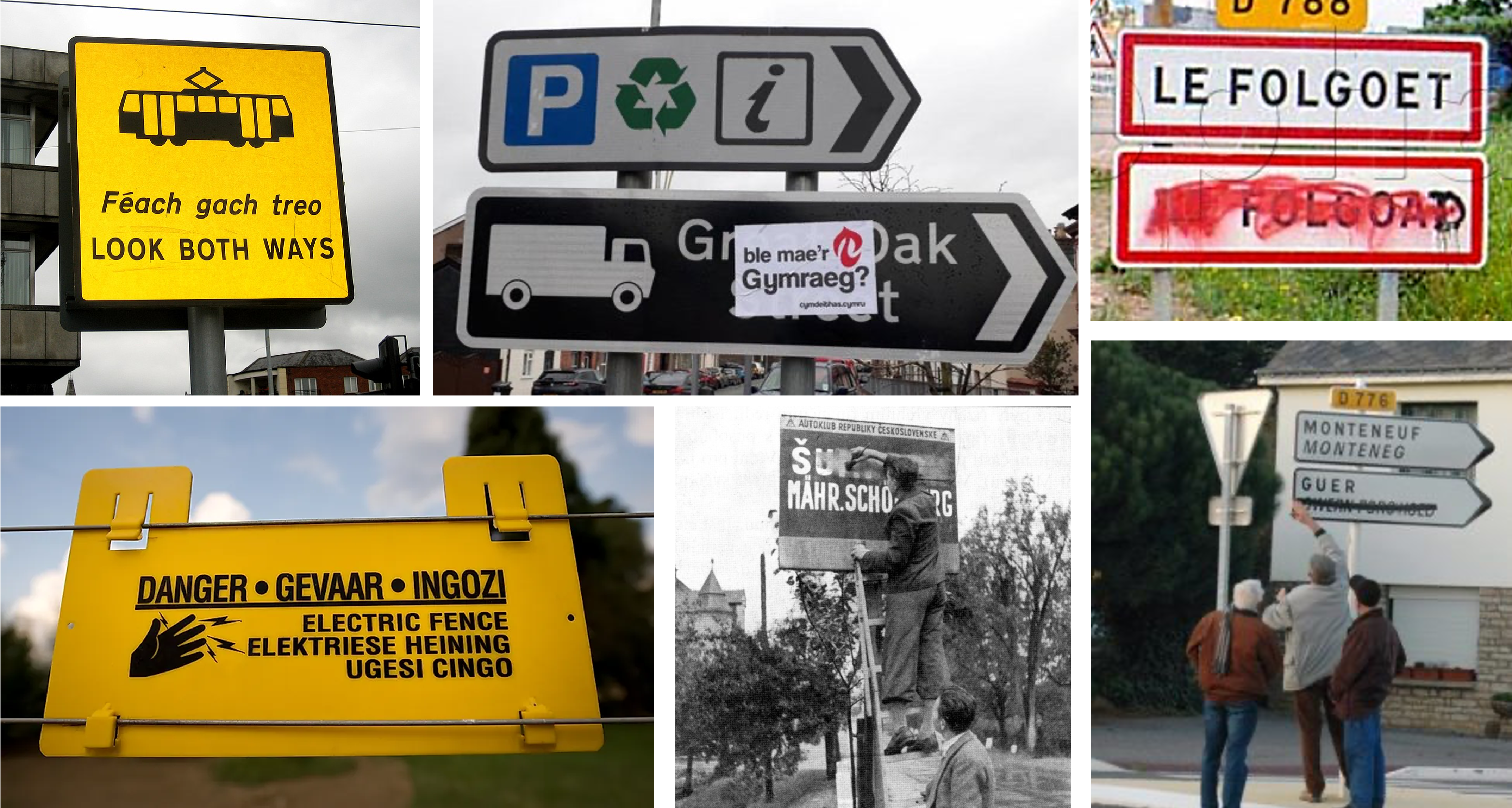
Linguistic Landscape research critically analyzes and interprets multimodal texts displayed in public places and spaces. This course will introduce students to foundational concepts in LL research and engage with key issues such as: the linguistic impacts of globalization and migration; power dynamics encoded in overt and covert language hierarchies; the negotiation of individual language attitudes within a society’s ideological context; toponymy, (re)naming/memorializing, and historicity; and how to specifically integrate the lessons gleaned from public textuality in the activities of daily life in our increasingly connected and multicultural world (e.g. a language-awareness pedagogy; a corporate cultural competence module). The goal of this course is to guide students in a hands-on research program with concrete deliverables.
Crime writing is a vibrant genre that has undergone crucial developments since the publication of Edgar Allan Poe's short story "Murders in the Rue Morgue" (1841), featuring early 'mastermind detective' C. Auguste Dupin. The success of the genre was initially enabled by its formulaic nature. However, it has since undergone crucial developments. Its flexibility to adapt to new settings and reflect social change while simultaneously challenging and subverting social and gender-specific norms has led to its increasing diversification across and beyond the Anglophone world.
This lecture will begin with an introduction to the field of popular culture and popular literature, and will then familiarize students with the history of the crime genre, which emerged in the late 19th and early 20th centuries in the UK and USA. After this historical introduction, we will turn to specific periods and settings across Anglophone literatures in order to trace more recent trends and developments, which include the emergence of women crime writers and the influence of feminism, the lasting success of the hard-boiled genre and the emergence of postcolonial crime fiction across the Anglophone world, including (but not limited to) Australia (including Indigenous Australian crime writing), Canada, the Caribbean, Ireland and South Africa. While the lecture will map the genre across the Anglophone world, parallel developments and influential trends, e.g. in Scandinavian and German literature and TV productions, will be acknowledged if and when relevant in order to address the international dimension and enduring popularity of the genre.
This module examines the microeconomic foundations of European integration, from its historical origins to the policies shaping today’s EU. It explores how trade liberalization, competition policy and factor market integration have influenced economic development and market dynamics across member states. Key topics include tariff regulations, labor mobility, regional policy and the role of state aid and agriculture in integration. By studying these processes, students will gain a deeper understanding of how economic policies drive European integration and affect businesses, workers and consumers.

In this Moodle course you're invited to challenge yourself and your command of English. You'll find numerous different exercises targeting grammar and vocabulary topics which are more or less closely linked to the English language courses offered at University Duisburg-Essen (e.g. CLC 1 and CLC 2).
There are a total of 10 topics and many exercises. You should, therefore, take your time to work through them, working on them regularly for a fixed amount of time, rather than trying to do as many as possible in one marathon sitting. A suggestion would be to put aside around 30-45 mins. 2-3 times a week. The goal is to learn, to improve your knowledge of English, rather than just to finish them.
It doesn't matter in which order you work through the topics, but, within each one, you're recommended to complete the exercises in the suggested order, or the order displayed. (They often build on each other.)
Successful completion of an exercise means getting at least 60% correct. (This is the way we grade all English language exams.) You can repeat them as often as you like, which will support your learning if you don't manage to reach that mark the first time. Once you've managed to get at least 60% for all exercises on one topic, you can be sure that you have a good understanding of that topic, which - in turn - means you can be proud of yourself for having accepted the challenge - and won. This knowledge will help you in the language courses, but also improve your understanding and production of English in your studies in general.
The European Dimension of Romanticism:
Byron, Heine, Pushkin
Di 10-12
Byron was an international literary superstar of his time. Both his poetry and his life were unconventional, provocative and scandalous. He was regarded as “mad, bad and dangerous to know” – and this is precisely what fascinated people not just in Britain, but all over the continent and beyond.
This seminar will give you an opportunity to get acquainted with Byron’s outrageously witty (and sometimes simply outrageous) narrative verse (especially Don Juan and Childe Harold’s Pilgrimage). In order to get an idea of the international impact of his works well beyond, our close reading of texts by Byron will be combined with a comparative approach, taking in both German and Russian texts (Heinrich Heine, Das Buch Le Grand and Englische Fragmente; Alexander Pushkin, Jewgenij Onegin, which, for reasons of practicality, will be read in German translation).
Please buy the following editions: George Gordon Lord Byron (Ed.: Jerome J. McGann), Lord Byron. The Major Works (Oxford World’s Classics), ISBN: 978019953744-4.
Alexander Puschkin (translated by Rolf-Dietrich Keil), Jewgeni Onegin. Roman in Versen (Insel), ISBN: 9783458342243. Other translations of this text are also of interest.
Heinrich Heine (Ed.: Bernd Kortländer), Reisebilder (Reclam), ISBN: 9783150187302
Requirements: thorough preparation for each session, active participation plus anything that might be required according to your Modulhandbuch / Studienordnung. As always: read, think, enjoy (!!), annotate (!) and look things up if necessary. The first text to be discussed is Byron’s Childe Harold’s Pilgrimage (Canto 1).
The seminar will be conducted entirely online and entirely in real time. We will meet each online via Zoom, each week of the semester at the time of the seminar. Please join the seminar´s Moodle room; you will receive further information via Moodle. Please make sure to use and check your official university e-mail addresses at all times. Do not use any other addresses, and do not have e-mails sent to your university address forwarded to other addresses. Our experience in the last semester has shown that that using non-university addresses / forwarding mails will lead to our messages bouncing back in very many cases.
Just in case your application is rejected by the LSF system: If you want to do this course because you are genuinely interested, you will be most welcome, no matter what LSF says. Please get in touch with claudia.hausmann@uni-due.de who will enrol you manually. The worst that might happen to you is that you cannot do a Leistungsnachweis if you lack the formal requirements.
Mo 18-20
The Extra Slot (offenes Oberseminar, alle zwei Wochen)
The Extra Slot provides an informal and friendly space for discussing texts and images (and occasionally also music) as well as questions and issues you find particularly interesting / fascinating / baffling. It is also a forum for discussing projects – yours as well as mine (ranging from seminar papers to BA/MA theses, or perhaps your first conference paper or plans for a Ph.D. thesis, to all sorts of publications etc.). This informal colloquium is for all those whose interests, enthusiasms and ambitions go well beyond what they are told they have to do. It also goes beyond the acquisition of Leistungsnachweise and credit points (of which there will be none whatsoever). This is the only one of my courses where no preparation is required.
In pre-Corona times, the Exta Slot description used to say: If any interesting opportunities come up, we may go and watch an English play, see an exhibition or attend other events connected with British literature and culture in and around Essen. Now that things are a bit different for reasons beyond our control, we will have to look for enjoyable digital alternatives.
The Extra Slot will be conducted entirely online and entirely in real time. We will meet each online via Zoom, each week of the semester at the time of the seminar. Please join the seminar´s Moodle room (password: ExtraWS20-21); you will receive further information via Moodle/e-mail. Please make sure to use and check your official university e-mail addresses at all times. Do not use any other addresses, and do not have e-mails sent to your university address forwarded to other addresses. Our experience in the last semester has shown that that using non-university addresses / forwarding mails will lead to our messages bouncing back in very many cases.
The Extra Slot is primarily aimed at students who have taken (or who are taking) one or several of my seminars/lectures. However, it is very much an open forum. Newcomers are most welcome. If you are new to the Extra Slot, please send an e-mail to christian.feser@uni-due.de who will put you on our mailing list
This series of informal meetings is for all those whose interests, enthusiasms and ambitions go beyond what they are told they have to do. There will be no credit points – however, there probably will be nibbles. This is the only one of my seminars where no preparation is required. The Extra Slot provides an informal and friendly space for discussing texts and images (and occasionally also music) as well as questions and issues you find particularly interesting / fascinating / baffling. It is also a forum for discussing projects – yours as well as mine (ranging from seminar papers to BA/MA theses, to job and scholarship applications and all sorts of writing projects, etc.). We hope to do one more little trips, maybe to see an exhibition, watch a play or attend other events associated with British literature and culture in and around Essen.
The Extra Slot is primarily aimed at students who have taken (or who are taking) one or several of my seminars/lectures. However, it is very much an open forum. Newcomers are most welcome, and if you already are part of this, do feel free to bring a friend.
If you would like to join the Extra Slot, please send an e-mail to chandni.rampersad@uni-due.de who will put you on our mailing list. This does not establish any obligations whatsoever – it just means that we will let you know when we have our meetings, and that you can come whenever you like.
Moodle an der UDE ist ein Service des ZIM