Lehr-Moodle der Universität Duisburg-Essen
Suchergebnisse: 2166
Strukturen und Theorien der internationalen Beziehungen werden zunehmend durch die ‚Globalisierung der Weltpolitik’ (Baylis et al. 2017) geprägt. Sowohl aus politischer wie auch aus wissenschaftlicher Perspektive verschiebt sich damit die Aufmerksamkeit auf transnationale und ‚globale’ bzw. ‚glokale‘ statt nationale und internationale Regulierungsbemühungen. Der erste Teil des Seminars beschäftigt sich mit den konzeptionellen und theoretischen Grundlagen von Global Governance, wobei sowohl Chancen als auch Grenzen und Blindstellen des Konzepts exemplarisch beleuchtet werden. Der zweite Teil widmet sich den unterschiedlichen Formen, Instrumenten und Akteuren internationalen Regierens, wobei ein besonderer Akzent auf die Frage gesetzt wird, ob und inwiefern nicht-westliche Ordnungsvorstellungen aufgenommen werden können. An einigen für die Nord-Süd-Beziehungen relevanten Politikfeldern soll schließlich in einem dritten Teil verdeutlicht werden, über welche Praktiken das Regieren mit dem Staat und jenseits des Staates funktioniert bzw. funktionieren kann. Eine besondere Rolle spielt dabei die Frage, inwiefern in der derzeitigen weltpolitischen Konstellation und insbesondere in Krisenregionen die Voraussetzungen für die Umsetzung komplexer Steuerungsansätze gegeben sind.
Lernziele
Die Studierenden verstehen zentrale Probleme bisheriger Versuche internationalen Regierens. Sie können unterschiedliche Global Governance-Konzepte unterscheiden und ihre jeweiligen Stärken und Schwächen abwägen. Sie können die Auswirkungen der fortschreitenden Globalisierung auf das Regulierungspotenzial bestehender Architekturen und theoretischer Entwürfe von globalem Regieren einschätzen. Sie verstehen, welchen Stellenwert Entwicklungsländer in der Global Governance haben und welche Legitimitätsprobleme sich daraus für internationale Regulierungsmechanismen ergeben.
Literatur
- Baylis, John & Smith, Steve (Hg.) (2017). The Globalization of World Politics. An Introduction to International Relations, 4. Aufl. Oxford: Oxford University Press.
- Dingwerth, K. & Pattberg, P. (2006). Global Governance as a Perspective on World Politics. In: Global Governance, 12:2, 185-203.
- Glaab, Katharina/Fuchs, Doris (2018): Globalisierung, Global Governance und internationale Politik. In: Sauer, Frank/Masala, Carlo (Hrsg.): Handbuch Internationale Beziehungen, Wiesbaden: Springer VS, S. 991-1015.
- Weiss, T.G. (2014). Rethinking Global Governance? Complexity, Authority, Power, Change. In: International Studies Quarterly, 58:1, 207-215.
Weitere Hinweise
Von den Studierenden wird im
Verlaufe des Seminars ein mündlicher oder schriftlicher Input erwartet.
Das Seminar schließt voraussichtlich mit einer mündlichen Prüfung ab.
- verantwortliche Lehrperson: Tobias Debiel
Kursbereich: Politikwissenschaft
ePortfolio: Nein
Strukturen und Theorien der internationalen Beziehungen werden zunehmend durch die ‚Globalisierung der Weltpolitik’ (Baylis et al. 2017) geprägt. Sowohl aus politischer wie auch aus wissenschaftlicher Perspektive verschiebt sich damit die Aufmerksamkeit auf transnationale und ‚globale’ bzw. ‚glokale‘ statt nationale und internationale Regulierungsbemühungen. Der erste Teil des Seminars beschäftigt sich mit den konzeptionellen und theoretischen Grundlagen von Global Governance, wobei sowohl Chancen als auch Grenzen und Blindstellen des Konzepts exemplarisch beleuchtet werden. Der zweite Teil widmet sich den unterschiedlichen Formen, Instrumenten und Akteuren internationalen Regierens, wobei ein besonderer Akzent auf die Frage gesetzt wird, ob und inwiefern nicht-westliche Ordnungsvorstellungen aufgenommen werden können. An einigen für die Nord-Süd-Beziehungen relevanten Politikfeldern soll schließlich in einem dritten Teil verdeutlicht werden, über welche Praktiken das Regieren mit dem Staat und jenseits des Staates funktioniert bzw. funktionieren kann. Eine besondere Rolle spielt dabei die Frage, inwiefern in der derzeitigen weltpolitischen Konstellation und insbesondere in Krisenregionen die Voraussetzungen für die Umsetzung komplexer Steuerungsansätze gegeben sind.
Lernziele
Die Studierenden verstehen zentrale Probleme bisheriger Versuche internationalen Regierens. Sie können unterschiedliche Global Governance-Konzepte unterscheiden und ihre jeweiligen Stärken und Schwächen abwägen. Sie können die Auswirkungen der fortschreitenden Globalisierung auf das Regulierungspotenzial bestehender Architekturen und theoretischer Entwürfe von globalem Regieren einschätzen. Sie verstehen, welchen Stellenwert Entwicklungsländer in der Global Governance haben und welche Legitimitätsprobleme sich daraus für internationale Regulierungsmechanismen ergeben.
Literatur
- Baylis, John & Smith, Steve (Hg.) (2017). The Globalization of World Politics. An Introduction to International Relations, 4. Aufl. Oxford: Oxford University Press.
- Dingwerth, K. & Pattberg, P. (2006). Global Governance as a Perspective on World Politics. In: Global Governance, 12:2, 185-203.
- Glaab, Katharina/Fuchs, Doris (2018): Globalisierung, Global Governance und internationale Politik. In: Sauer, Frank/Masala, Carlo (Hrsg.): Handbuch Internationale Beziehungen, Wiesbaden: Springer VS, S. 991-1015.
- Weiss, T.G. (2014). Rethinking Global Governance? Complexity, Authority, Power, Change. In: International Studies Quarterly, 58:1, 207-215.
Weitere Hinweise
Von den Studierenden wird im Verlaufe des Seminars ein mündlicher oder schriftlicher Input erwartet. Das Seminar schließt voraussichtlich mit einer mündlichen Prüfung ab.
- verantwortliche Lehrperson: Tobias Debiel
- verantwortliche Lehrperson: Luca Rogers
- verantwortliche Lehrperson: Wencke Rottländer
Kursbereich: Politikwissenschaft
ePortfolio: Nein
The seminar covers central concepts and controversies of development research and development cooperation. We will start by introducing key theoretical concepts of development and strands of critique. We will then discuss central controversies concerning normative ideas about developmental success/failure, and contemporary programmatic policy changes that characterise the research and policy fields of development. We will also engage with radically critical perspectives on the discourse and practice of development cooperation (e.g. based on post- and decolonial perspectives).
We put a special focus on addressing the increasingly influential role of private, transnational actors: the power and responsibility of large corporations as development actors, their regulation, and the development policy controversies around global production, trade, and financial markets. These represent key issue areas for international development. We approach them by linking development research with theories of transnational private governance and global political economy. We include empirical case studies.
The seminar will enable students to deepen their knowledge of development concepts and political-economic paradigms, and to critically engage with the sometimes contradictory assumptions and policies associated with them. Students will learn to critically reflect on the development discourse, its different theoretical approaches and related practices of international cooperation with a view towards engagement in their own research projects.
The course is open to students of MA Internationale Beziehungen und Entwicklungspolitik and MA Development and Governance.
The course language is English.
Students are expected to attend regularly, to read assigned texts, and to engage actively in our discussions.
At the end of the lecture period, students will write a short policy brief as an examination assignment (to be submitted by 31 March 2026). All necessary details will be discussed in the course.
- verantwortliche Lehrperson: Christian Scheper
Kursbereich: Politikwissenschaft
ePortfolio: Nein
Do 14-16 Uhr, Vertiefungsbereich 2-Fach-Bachelor
Raum und Zeit sind grundlegende Kategorien der historischen Betrachtung. Historisches Geschehen entfaltet sich im Zeitverlauf und ist an Räume gebunden. Im Gegensatz zum Physiker begreift der Historiker die beiden Kategorien freilich als menschengemacht. Sie sind keine neutralen „Container“, in denen Ereignisse zu beobachten sind, sondern selbst dem historischen Wandel unterworfen: Individuen und soziale Gruppen fassen Zeit in unterschiedlicher Weise auf, und der „spatial turn“, der seit den 1990er Jahren für die Geschichtswissenschaft ein großes Anregungspotenzial besitzt, geht von der Annahme aus, dass auch Räume in erster Linie sozial konstruiert sind.
Das Seminar wird diese Zusammenhänge anhand der Lektüre theoretischer Texte erörtern, aber auch konkrete empirische Studien zur Kenntnis nehmen.
- verantwortliche Lehrperson: Frank Becker
Kursbereich: Geschichte
ePortfolio: Nein
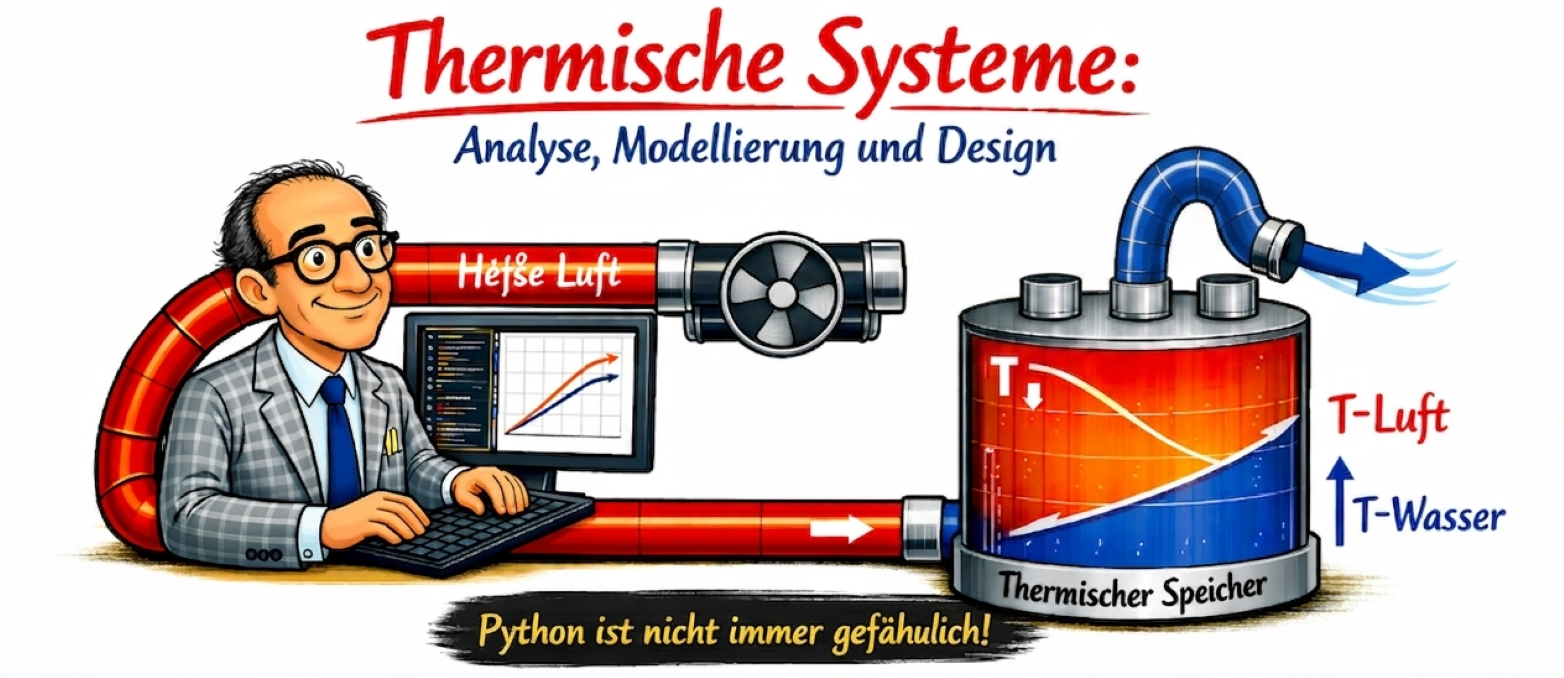
Jeweils im Wintersemester, (Beginn /Vorbesprechung 14. Oktober 2025)
Dienstags 16 Uhr MC 327, 1V 2Ü
Die Veranstaltung bespricht anhand exemplarischer Beispiele (u.a. Wärmeübertragernetzwerk, Wärmespeicher, thermische Behandlung von Werkstoffen) die Analyse thermischer Systeme im Hinblick auf die erzeugte Entropie bzw. den Exergieverlust im Hinblick auf erforderliche Randbedingungen. Die Modellbildung solcher Systeme wird beginnend mit der stationären Modellierung über die instationäre bis hin zur eindimensional-instationären Modellierung im Hinblick auf die Parameteranalyse, Sensitivität auf verschiedene Parameter, bis hin zum akzeptablen Design besprochen und von den Studierenden durchgeführt. Ausgehend vom akzeptablen Design wird die Parameteroptimierung im Hinblick auf ein optimales Design besprochen.
Die Veranstaltung beinhaltet einen großen Teil Computer-Übungen in Python, in denen die praktische Umsetzung der erlernten Methoden im Vordergrund steht.
Inhalt:
- Einführung
- Python, eine objektorientierte Skriptsprache und ihr Einsatz bei wissenschaftlich-technischen Problemstellungen
- Analyse thermischer Systeme
- Modellierung thermischer Systeme
- Design thermischer Systeme: akzeptables Design
- Optimierungsverfahren und -strategien
- Design thermischer Systeme: optimales Design
[evtl.:
- Entropieproduktion als Kriterium zur Beurteilung thermischer Systeme
- Ausblick: Ökonomische Erwägungen ]
- Zusammenfassung
- verantwortliche Lehrperson: Burak Atakan
- verantwortliche Lehrperson: Niklas Tomasik
- verantwortliche Lehrperson: Alexandra Welp
Kursbereich: Maschinenbau und Verfahrenstechnik
ePortfolio: Nein
The lecture deals with thermoelectric materials and systems which can employed to convert heat directly into electrical energy or to control temperature very precisely. Starting from the basic thermoelectric effects and thermodynamic relations different aspects of the field are introduced and set into relation with each other. These include e.g.:
· Synthesis of state-of-the-art thermoelectric materials
· Fabrication of thermoelectric generators and coolers
· Contact development for thermoelectric devices
· Synthesis-microstructure-property relationships
· Modelling of thermoelectric devices with different complexities: influence of contact resistances and the temperature dependence of material quantities
· Measurement technique for thermoelectric materials and devices
· Design of thermoelectric devices for different applications ranging from space probes over automotive to healthcare
The lecture is clearly interdisciplinary and includes aspects of solid state physics, semiconductor physics, thermodynamics but also manufacturing technology and measurement technique.
- verantwortliche Lehrperson: Johannes de Boor
Kursbereich: Elektrotechnik und Informationstechnik
ePortfolio: Nein
The lecture deals with thermoelectric materials and systems which can employed to convert heat directly into electrical energy or to control temperature very precisely. Starting from the basic thermoelectric effects and thermodynamic relations different aspects of the field are introduced and set into relation with each other. These include e.g.:
· Synthesis of state-of-the-art thermoelectric materials
· Fabrication of thermoelectric generators and coolers
· Contact development for thermoelectric devices
· Synthesis-microstructure-property relationships
· Modelling of thermoelectric devices with different complexities: influence of contact resistances and the temperature dependence of material quantities
· Measurement technique for thermoelectric materials and devices
· Design of thermoelectric devices for different applications ranging from space probes over automotive to healthcare
The lecture is clearly interdisciplinary and includes aspects of solid state physics, semiconductor physics, thermodynamics but also manufacturing technology and measurement technique.
- verantwortliche Lehrperson: Johannes de Boor
Kursbereich: Lehrstuhl für Nanostrukturtechnik (NST)
ePortfolio: Nein

This course is a problem-oriented research colloquium in which students will have the chance to talk about their work, discuss theories and methodologies and peer-review their written work and presentation skills. Designed for BA and Master candidates who are in the process of writing their final theses in literary and cultural studies, this colloquium will address especially three of the central aspects of a convincing academic thesis: (a) how to find the relevant scholarship for the topic under consideration; (b) how to evaluate scholarly, literary and cultural sources and how to use them correctly, critically and productively; (c) how to develop a sustained argument. Participants are expected to present material from their theses and to critique the work of their fellow students.
- verantwortliche Lehrperson: Barbara Buchenau
- verantwortliche Lehrperson: Florian Freitag
Kursbereich: Anglistik/Amerikanistik
ePortfolio: Nein

This course is a problem-oriented research colloquium in which students will have the chance to talk about their work, discuss theories and methodologies and peer-review their written work and presentation skills. Designed for BA and Master candidates who are in the process of writing their final theses in literary and cultural studies, this colloquium will address especially three of the central aspects of a convincing academic thesis: (a) how to find the relevant scholarship for the topic under consideration; (b) how to evaluate scholarly, literary and cultural sources and how to use them correctly, critically and productively; (c) how to develop a sustained argument. Participants are expected to present material from their theses and to critique the work of their fellow students.
- verantwortliche Lehrperson: Florian Freitag
Kursbereich: Anglistik/Amerikanistik
ePortfolio: Nein
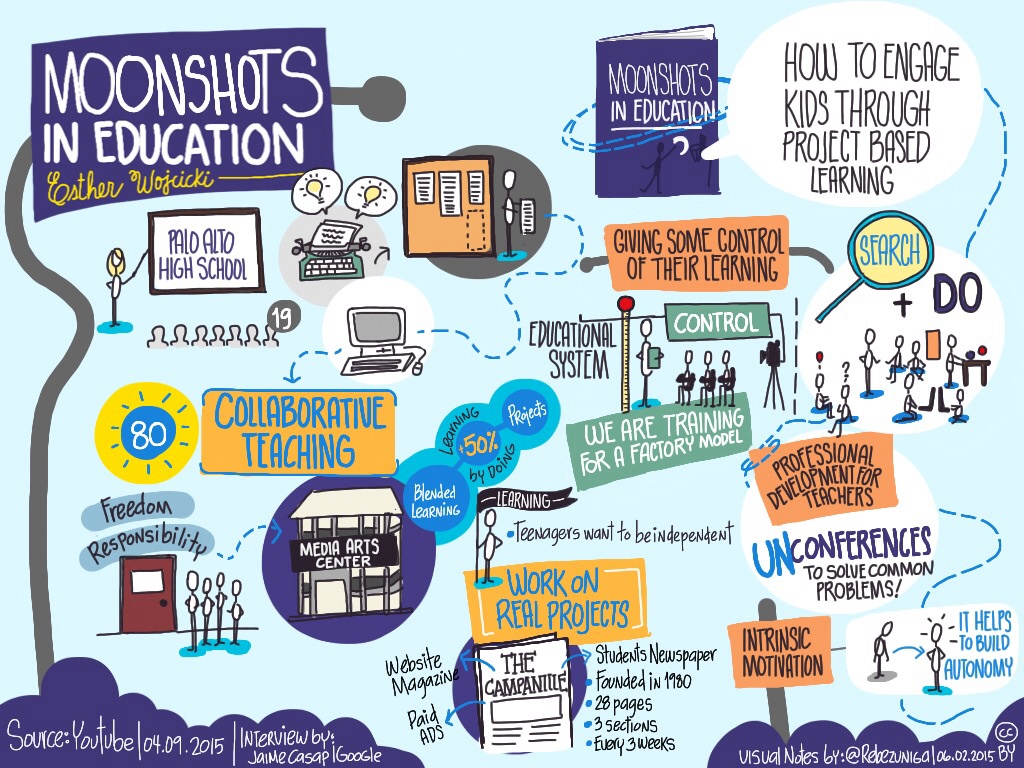
Das Seminar "Think Tank: Digitalität und Bildung" findet im Sommersemester 2025 am Campus Essen statt.
- verantwortliche Lehrperson: David Tobinski
Kursbereich: Psychologie
ePortfolio: Nein
|
In this seminar, we are going to trace developments in the British perception of India from the very first encounters in the late sixteenth century to the end of British rule in India. We will come across a wide range of perspectives: from informal and formal colonialism fuelled by the desire for wealth and power to Indophiles immersing themselves in Indian culture. This seminar will give you an opportunity to study inter-cultural encounters and the texts, images (and even some music) created as a result of such contacts. This seminar will also give you an opportunity to get acquainted with people such as Thomas Coryate, who, from 1612, walked on foot from Istanbul to India, William Jones, who in the eighteenth century discovered that Indian and European languages were related, and Fanny Parkes, who described her experiences in early nineteenth-century India in a remarkable diary. The seminar will probably be conducted entirely online and entirely in real time - it all depends on the conditions imposed by the pandemic which are not really predictable right now. In this case, we will meet via Zoom each week of the semester at the time of the seminar. You will receive further information concerning the Moodle room and the Zoom link for this course once you have registered. Please make sure to use and check your official university e-mail addresses at all times. Do not use any other addresses, and do not have e-mails sent to your university address forwarded to other addresses. Our experience in the last semester has shown that using non-university addresses / forwarding mails will lead to our messages bouncing back in very many cases. The texts and images we are going to work on will be made available either online via Moodle or, if we can return to face to face teaching, in the shape of a paper reader. Once again, you will receive further information concerning this via e-mail. As always: think, enjoy (!), annotate, and look things up if necessary. Requirements: thorough preparation for each session, active participation, and, if applicable, written work/exam according to your particular Studienordnung. Just in case your application is rejected by the LSF system: If you want to do this course because you are genuinely interested, you will be most welcome, no matter what LSF says. Please get in touch with claudia.hausmann@uni-due.de who will enrol you manually. The worst that might happen to you is that you cannot do a Leistungsnachweis if you lack the formal requirements. |
- verantwortliche Lehrperson: Christian Feser
- verantwortliche Lehrperson: Claudia Hausmann
- verantwortliche Lehrperson: Christoph Heyl
- verantwortliche Lehrperson: Chandni Rampersad
Kursbereich: Anglophone Studien
ePortfolio: Nein
This seminar will give you an opportunity to get acquainted with a remarkable author and his remarkable works. John Donne (1572-1631) grew up as a Catholic, became a law student, abandoned Catholicism, did an internship as a pirate, became a nobleman’s secretary, lost his job because of a secret marriage, spent some time in prison, tried to become an ambassador and eventually became, as dean of St. Paul’s cathedral, a high-ranking clergyman. He was also a poet. However his poems are not exactly what you would perhaps expect from a seventeenth-century clergyman. Donne wrote in a way that was both experimental and daring. In particular, he liked to combine erotic and religious ideas and imagery. In his poems, we shall come across dreams and ecstasies, air and angels, apparitions and alchemy, broken hearts, an erotically active flea, several cases of witchcraft and, obviously, a falling star.
Please buy the following edition: John Donne (Ed.: A. J. Smith), The Complete English Poems (Penguin Classics), ISBN: 9780140422092. Additional material will be made available online. Due to the Corona situation, the entire seminar will be conducted online.
Requirements: Thorough preparation for each session, active participation plus anything that might be required according to your Modulhandbuch/Studienordnung. As always: read, think, enjoy (!!), annotate (!) and look things up if necessary. The first texts to be discussed will be “The Flea”, “Twicknam Garden” and “The Funeral”.
- verantwortliche Lehrperson: Christian Feser
- verantwortliche Lehrperson: Claudia Hausmann
- verantwortliche Lehrperson: Christoph Heyl
Kursbereich: Anglophone Studien
ePortfolio: Nein
Der Kurs steht allen Wissenschaftlerinnen und Wissenschaftlern am Universitätsklinikum Essen sowie an der Universität Duisburg-Essen zur Verfügung, die eine Leitungs-Funktion in genehmigungspflichtigen Tierversuchen einnehmen wollen. Externe Teilnehmende werden nur in begründeten Ausnahmefällen zugelassen.
Die Teilnahme ist nur möglich, wenn man zuvor den Kurs „Tierexperimentelles Arbeiten - EU-Funktion A (Durchführung von Tierversuchen)“ oder einen FELASA B-Kurs erfolgreich absolviert hat. Die theoretischen Kursanteile in diesem Aufbaukurs setzen z.T. an den Inhalten dieser Kurse an und intensivieren diese.
Die Teilnahme an den theoretischen Kursanteilen erfolgt im Selbststudium anhand der eingestellten Vorlesungen. Die theoretischen Kursanteile werden durch eine Pflicht-Klausur abgeschlossen (s. separate Terminliste).
Die Teilnahme an den praktischen Kursanteilen erfolgt individuell nach Absprache mit den Dozierenden. Bitte kontaktieren Sie die Kursleitenden (philip.dammann@uk-essen oder gero.hilken@uk-essen.de) für weitere Infomationen. Für die praktischen Kursanteile ist keine Pflicht-Klausur vorgesehen.
Ein vollständiges Zertifikat wird für Kursteilnehmende ausgestellt, sobald alle Kursinhalte studiert wurden, in den praktischen Übungen alle vorgesehenen Aufgaben eigenständig durchgeführt wurden und die Pflicht-Klausur (Theorieteil) bestanden wurde.
- verantwortliche Lehrperson: Philip Dammann
- verantwortliche Lehrperson: Marko Dubicanac
- verantwortliche Lehrperson: Medizinische Fakultät
- verantwortliche Lehrperson: Gero Hilken
- verantwortliche Lehrperson: Ralph Waldschütz
- verantwortliche Lehrperson: Andreas Wißmann
Kursbereich: Allgemeine Weiterbildung
ePortfolio: Nein
Der Kurs steht allen Angehörigen des Universitätsklinikums Essen sowie der Universität Duisburg-Essen zur Verfügung, die mit Tierversuchen befasst sind bzw. Tierversuche durchführen wollen. Dazu gehören Studierende, wissenschaftliche Mitarbeitende, technische Mitarbeitende und Tierpfleger(innen). Externe Teilnehmende können auf Anfrage auch zugelassen werden.
- verantwortliche Lehrperson: Philip Dammann
- verantwortliche Lehrperson: Marko Dubicanac
- verantwortliche Lehrperson: Medizinische Fakultät
- verantwortliche Lehrperson: Gero Hilken
- verantwortliche Lehrperson: Ralph Waldschütz
- verantwortliche Lehrperson: Andreas Wißmann
Kursbereich: Allgemeine Weiterbildung
ePortfolio: Nein
Liebe Studierende,
in diesem Moodle-Kurs können Sie sich für eine Sprechstunde bei mir anmelden.
Freundliche Grüße
Tilmann Wilton
- verantwortliche Lehrperson: Regina Dohm
- verantwortliche Lehrperson: Tilmann Wilton
Kursbereich: Erziehungswissenschaft
ePortfolio: Nein
Sie stehen überall in Wohnungen, Restaurants und Bürogebäuden, leicht zu übersehen, doch Tische sind zentrale Medien der Vergesellschaftung: Hier kommen Menschen zusammen, hier entsteht Gespräch und Gemeinschaft. Rund um den Tisch werden nicht einfach nur Informationen ausgetauscht: Bei Tisch wird Distinktion geübt und Geschmack ausgebildet, an diesem Möbelstück wird gearbeitet und konsumiert, hier entladen sich Emotionen oder sie werden angestrengt zurückgehalten. Literatur und Film erzählen unaufhörlich von Tischen und Tischgesprächen – davon, welche Regeln sie in Gang setzen, wie hier klassen- und geschlechtsspezifische Verhaltensweisen aufeinanderprallen und auch wie Subjekte geformt werden. Vermittelt durch den Tisch, der sich in seiner Materialität selbst als ein Aktant entpuppen kann, entwerfen Literatur und Film kleine Soziogramme der jeweiligen Kultur und Gesellschaft – diese wollen wir in diesem Seminar verfolgen.
Anhand von literarischen Texten, Filmausschnitten, Lesungen, Poetry Performances und Forschungsliteratur erarbeiten wir uns literatur- und medienkulturwissenschaftliche Fragestellungen rund um das historisch-kulturell veränderliche Tischgespräch. Close Readings, Schreibübungen und Referate üben im Kurs wissenschaftliche Techniken ein, die für das gesamte Studium nützlich sind.
- verantwortliche Lehrperson: Roxanne Phillips
Kursbereich: Literaturwissenschaft
ePortfolio: Nein
To see ourselves as others see us: Perceptions and Stereotypes of Germany in English Texts and Other Media (from the Seventeenth Century to the Present)
|
This seminar will give you an opportunity to study perceptions and stereotypes of Germany and German people in English texts. We shall look at early visitors from the British isles travelling to our part of the world in the seventeenth century, German monarchs on the British throne in the eighteenth century, more German and German-speaking monarchs in the Victorian period (i.e. Queen Victoria, whose mother was German, and her husband Prince Albert, who was very German), German immigrants in London, nineteenth-century English tourists exploring the Rhine, the impact of the first and the second World War on ideas about Germany and much more, up to how the perception of Germany has been developing in the Post-Brexit period (just think about British journalists reporting on chaotic inefficiency of public transport during the 2024 during the UEFA 2025 European football championship). There will be productive digressions taking in various topics and media (Germany in British movies, the weird and wonderful Monty Python “Holzfällerlied”, Germany in the visual arts, for instance in caricatures, and the idea of Bavaria as the Scotland of Germany). The material to be studied will be made available in a Moodle room. Requirements: thorough preparation for each session, active participation. As always: think, enjoy (!), annotate, and look things up if necessary. Just in case your application is rejected by the LSF system: If you want to do this course because you are genuinely interested, you will be most welcome, no matter what LSF says. Please get in touch with claudia.hausmann@uni-due.de who will enrol you manually. The worst that might happen to you is that you cannot do a Leistungsnachweis if you lack the formal requirements. |
- verantwortliche Lehrperson: Christoph Heyl
Kursbereich: Anglophone Studien
ePortfolio: Nein
Description:
Artificial Intelligence (AI) is widely considered a generative technology that has the potential to have great impact on our society, economy, and ecology. Whether these impacts will be for worse or for better is up for discussion and depends on the actions of individuals, companies, and authorities worldwide towards the 18 UN Sustainable Development Goals.
Throughout the lecture series, students get familiar with concepts and theories that describe and explain AI companies, and learn about the design of Machine Learning-based applications. Do we need AI – or does AI solve our problems? What problems can machine learning effectively solve? What is the current impact of AI technologies on economy, society and ecology? How can we apply AI to a new domain or problem? What role do humans play in designing AI applications?
Building on fundamentals of information systems strategy and enterprise modelling, students reflect the impact of strategy and organizing in AI companies towards their ability to produce sustainable futures. We particularly investigate the generative capacity of data, tools, and (machine learning) models to produce such futures. Among others, we will cover the impact of biases in data and algorithms, explainability of AI applications, as well as accuracy, sovereignty, (inverse) scalability and framing of ML models. Throughout the entire module, we critically reflect impacts of managerial and algorithmic decision-making on sustainability, this includes impacts, for instance, on aspects of health and well-being (SDG 3), gender equality (SDG 5), or climate action (SDG 13).
Learning Targets:
Students will be able to
- reflect on data-centric thinking in companies
- explain the difference between types of tasks for AI and multiple machine learning techniques
- apply machine learning techniques with low-code tools and are familiar with current models and libraries.
- understand and apply theories of strategy and organization to AI companies
- understand generative properties and mechanisms of information systems, especially AI applications
- explain and critically reflect the impact of characteristics of digital resources, including data, digital tools, and (machine learning) models on AI applications.
- explain and critically reflect the impact of information systems, particularly AI applications, on multiple sustainable development goals
- describe fundamental processes, methods, and tools producing AI applications
- describe and apply fundamental methods of ML project management.
- design a business case for an AI application and produce a minimum-viable product
- apply text generation and image generation models in assignments and reflect on their use
Outline:
• AI Companies & Data-centric Thinking
• Sustainable Information Systems
• Strategy & AI Companies for Sustainable Futures
• Organization & AI Companies for Sustainable Futures
• Managing Machine Learning Projects for Sustainable Futures
• Building AI Applications
• Generativity and Boundaries from Digital Tools
• Generativity and Boundaries from Data
• Generativity and Boundaries from (ML) Models
Literature:
- Berente, N., Gu, B., Recker, J., & Santhanam, R. (2021). Managing artificial intelligence. MIS Quarterly, 45(3).
- Brynjolfsson, E., & Mcafee, A. (2017). Artificial intelligence, for real. Harvard Business Review, 1, 1-31.
- Brynjolfsson, E., Rock, D., & Syverson, C. (2018). Artificial intelligence and the modern productivity paradox: A clash of expectations and statistics. In The economics of artificial intelligence: An agenda (pp. 23-57). University of Chicago Press.
- Fürstenau, D., Baiyere, A., Schewina, K., Schulte-Althoff, M., and Rothe, H. (forthcoming). Extended Generativity Theory on Digital Platforms, Information Systems Research.
- Gregory, R. W., Henfridsson, O., Kaganer, E., & Kyriakou, H. (2021). The role of artificial intelligence and data network effects for creating user value. Academy of Management Review, 46(3), 534-551.
- Provost, F., & Fawcett, T. (2013). Data Science for Business: What you need to know about data mining and data-analytic thinking. O'Reilly Media, Inc.
- Raisch, S., & Krakowski, S. (2021). Artificial intelligence and management: The automation–augmentation paradox. Academy of Management Review, 46(1), 192-210.
- Russell, S., & Norvig, P. (2021). Artificial Intelligence, Global Edition: A Modern Approach. (4th ed.). Pearson Education.
Further literature will be provided during the course
- verantwortliche Lehrperson: Hannes Rothe
- verantwortliche Lehrperson: Mahnoor Shahid
Kursbereich: Wirtschaftswissenschaften
ePortfolio: Nein

Artificial Intelligence (AI) is widely considered a generative technology that has the potential to have great impact on our society, economy, and ecology. Whether these impacts will be for worse or for better is up for discussion and depends on the actions of individuals, companies, and authorities worldwide towards the 17 UN Sustainable Development Goals.
Throughout the lecture series, students get familiar with concepts and theories that describe and explain AI companies, and learn about the design of Machine Learning-based applications. Do we need AI – or does AI solve our problems? What problems can machine learning effectively solve? What is the current impact of AI technologies on economy, society and ecology? How can we apply AI to a new domain or problem? What role do humans play in designing AI applications?
Building on fundamentals of information systems strategy and enterprise modelling, students reflect the impact of strategy and organizing in AI companies towards their ability to produce sustainable futures. We particularly investigate the generative capacity of data, tools, and (machine learning) models to produce such futures. Among others, we will cover the impact of biases in data and algorithms, explainability of AI applications, as well as accuracy, sovereignty, (inverse) scalability and framing of ML models. Throughout the entire module, we critically reflect impacts of managerial and algorithmic decision-making on sustainability, this includes impacts, for instance, on aspects of health and well-being (SDG 3), gender equality (SDG 5), or climate action (SDG 13).
- verantwortliche Lehrperson: Mahnoor Shahid
Kursbereich: Wirtschaftsinformatik
ePortfolio: Nein